
When attention problems deserve a closer look
Difficulty focusing happens to everyone from time to time. Adult ADHD, however, involves a persistent pattern of inattention and/or hyperactivity-impulsivity that interferes with functioning in important areas of life.
In adults, ADHD may show up as chronic disorganization, difficulty estimating time, unfinished tasks, forgetfulness, distractibility, impulsive decisions, internal restlessness, trouble prioritizing, or inconsistent follow-through.
These symptoms can affect work, relationships, routines, finances, health habits, and day-to-day responsibilities. They can also overlap with sleep problems, anxiety, depression, hormonal changes, medication effects, and other medical concerns.
A thoughtful ADHD evaluation looks beyond a single questionnaire or a brief description of distractibility.
Mindfuse Health reviews current symptoms, functional impact, relevant childhood history, work and home patterns, medication and substance history, sleep, mood, and medical factors that may mimic or worsen attention problems.
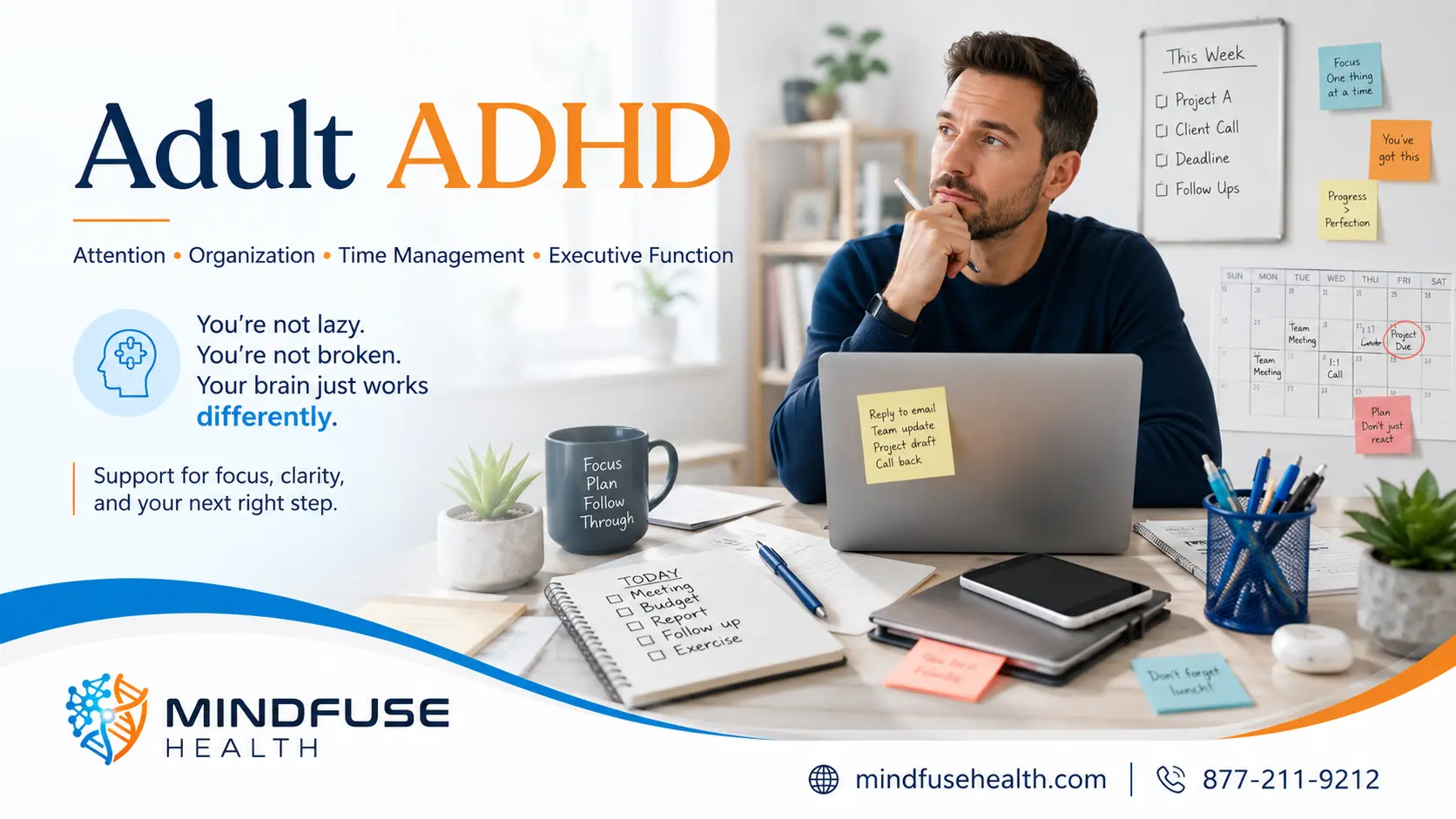
Adult ADHD can look different in everyday life
Experiences such as time blindness, difficulty starting tasks, chronic restlessness, losing track of responsibilities, or becoming overwhelmed by routine tasks may occur in adults with ADHD.
These experiences are not specific to ADHD, however, and can have several possible causes. A structured clinical evaluation helps determine whether ADHD or another condition may better explain the symptoms.
Adult ADHD symptom patterns
ADHD may involve ongoing difficulty with attention and organization, restlessness, impulsivity, or a combination. The pattern should be considered across time and settings rather than inferred from a single behavior. Read adult ADHD symptoms in everyday life for detailed examples, including procrastination and difficulty starting tasks and impulsivity in adults.
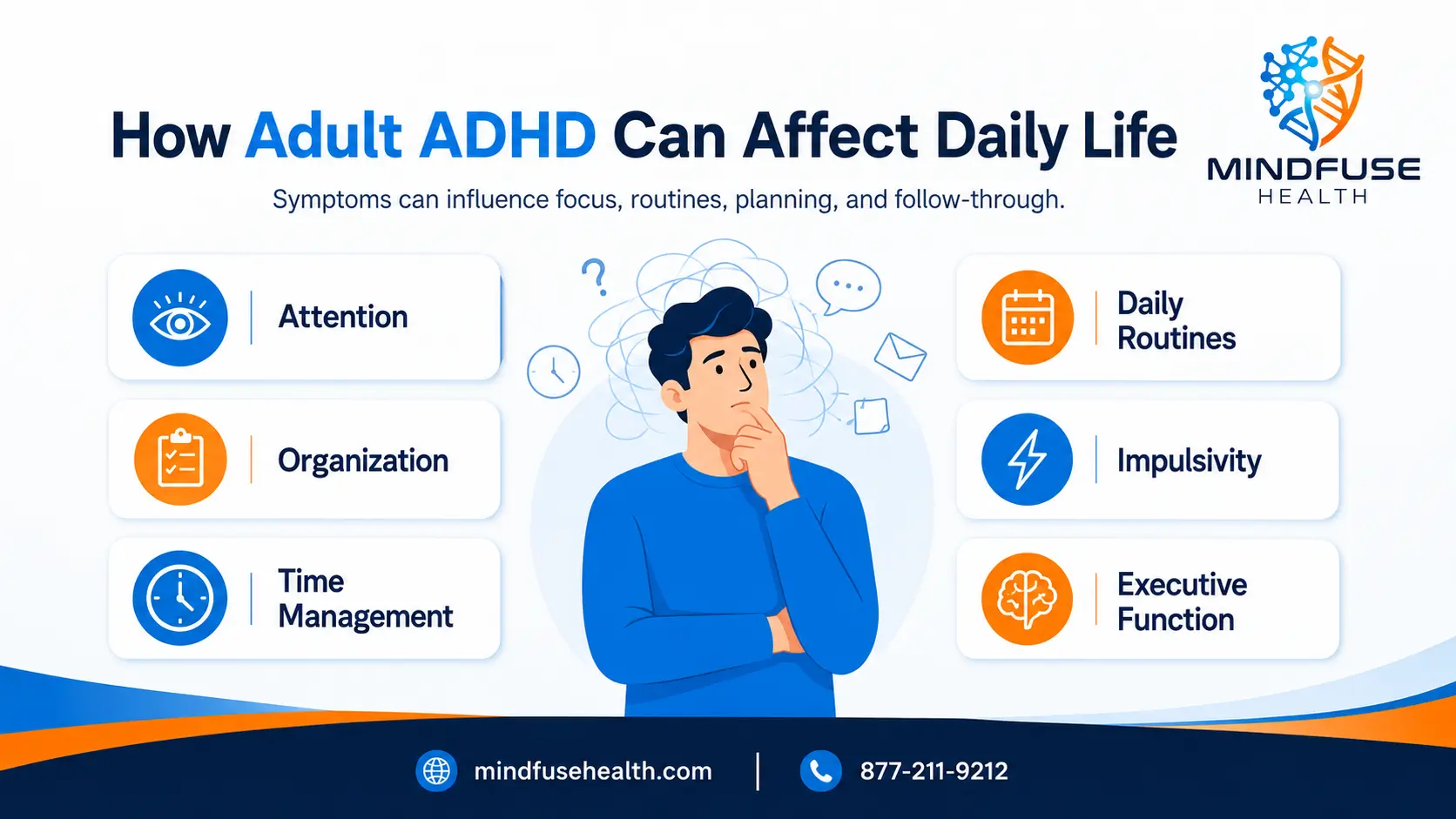
How Adult ADHD can affect daily life
Adult ADHD is not simply about being distracted. Symptoms may affect several areas of daily functioning.
Work and professional responsibilities
Adults may have difficulty prioritizing tasks, meeting deadlines, managing multiple projects, remembering meetings, estimating time, or consistently completing routine administrative work.
Some people perform very well when a task is urgent or highly engaging but have considerable difficulty with repetitive or less stimulating responsibilities.
Relationships and communication
Forgetfulness, distraction, impulsive responses, difficulty listening consistently, or problems managing routines can sometimes create misunderstandings within relationships.
Recognizing the underlying pattern can help patients and clinicians identify more effective strategies.
Home and daily routines
ADHD-related executive-function difficulties may affect household tasks, bills, appointments, meal planning, organization, medication routines, or other recurring responsibilities.
Education and learning
Adults returning to school or completing professional training may notice difficulty sustaining attention while reading, planning assignments, studying consistently, or completing long-term projects.
How Adult ADHD is evaluated
There is no single test that independently establishes an ADHD diagnosis.
A clinical evaluation considers the overall pattern of symptoms, how long they have been present, how they affect daily functioning, and whether another medical or mental-health condition may better explain them.
An Adult ADHD evaluation may include:
- A structured clinical interview and detailed symptom history
- Review of attention, organization, impulsivity, restlessness, and executive function
- Discussion of how symptoms affect work, relationships, routines, and daily responsibilities
- Review of symptom duration and when difficulties first became noticeable
- Review of childhood or earlier-life symptoms when available
- Screening for sleep problems, anxiety, depression, and other overlapping concerns
- Review of current medications and possible medication effects
- Discussion of substance use when clinically relevant
- Review of previous mental-health or medical diagnoses
- Review of prior ADHD evaluations or treatment records when available
- Discussion of previous medication response when relevant
- Consideration of other medical factors that may affect attention or cognitive performance
The goal is not simply to determine whether someone reports difficulty concentrating. The goal is to understand why those difficulties are occurring and how they affect functioning.
See what happens during an adult ADHD evaluation for a practical guide to the first visit, possible outcomes, and pricing.
Can ADHD be diagnosed for the first time in adulthood?
Yes. Some people receive their first formal ADHD diagnosis as adults even though symptoms were present much earlier.
ADHD is considered a neurodevelopmental condition, so clinicians generally look for evidence that relevant symptoms or functional difficulties were present earlier in development, even if they were not recognized as ADHD at the time.
For some adults, symptoms may have been partially compensated for by structured environments, family support, strong academic ability, or highly engaging work. Difficulties may become more noticeable when responsibilities increase or when life circumstances change.
An adult evaluation therefore considers both current symptoms and relevant earlier-life patterns whenever that information is available.
Conditions that can overlap with ADHD symptoms
Problems with concentration, memory, motivation, or executive function do not automatically mean that someone has ADHD.
Several medical and mental-health concerns can produce similar symptoms or make existing ADHD symptoms more difficult to manage.
Sleep problems
Insufficient sleep, insomnia, irregular sleep schedules, sleep apnea, and other sleep disorders can affect attention, memory, reaction time, energy, and executive function.
For patients experiencing snoring, daytime sleepiness, poor-quality sleep, or persistent fatigue, a separate sleep evaluation may be appropriate.
Anxiety and depression
Anxiety can interfere with concentration when attention becomes dominated by worry, physical tension, or persistent mental activity.
Depression may affect attention, memory, motivation, energy, and the ability to initiate or complete tasks.
ADHD, anxiety, and depression can also occur together. A careful evaluation considers the timing, persistence, and pattern of symptoms rather than assuming that every concentration problem has the same cause.
Learn more about anxiety and depression.
Hormonal changes and perimenopause
Hormonal changes during perimenopause and menopause may affect sleep, mood, memory, concentration, and perceived cognitive performance.
For women with ADHD, changes during midlife may also make previously manageable executive-function difficulties feel more noticeable.
Because these symptoms can overlap, it may be important to consider both ADHD and hormonal factors rather than assuming that all new concentration problems are caused by one condition.
Read more about ADHD and perimenopause.
Brain fog and cognitive concerns
Patients sometimes describe difficulty concentrating as “brain fog.” This may involve slowed thinking, forgetfulness, mental fatigue, or difficulty finding words.
Brain fog can have several potential causes and is not synonymous with ADHD.
Learn more about brain fog and cognitive concerns.
Medication, substance, and medical factors
Certain medications, substances, metabolic concerns, medical conditions, and other health factors may affect concentration, sleep, energy, or cognition.
Reviewing these factors helps reduce the risk of treating every attention complaint as ADHD.
Adult ADHD vs anxiety or depression
ADHD, anxiety, and depression can all affect concentration, but the underlying patterns may differ.
ADHD generally involves persistent difficulties with attention regulation, organization, executive function, and/or impulsivity that began earlier in development.
With anxiety, concentration may become more difficult because attention is repeatedly pulled toward worry, uncertainty, physical tension, or perceived threats.
With depression, problems with concentration may occur alongside low mood, reduced interest, low energy, slowed thinking, or decreased motivation.
These conditions can also coexist.
A structured evaluation considers symptom history, timing, functional impact, developmental patterns, sleep, mood, and other factors before determining the most appropriate diagnosis or treatment plan.
Adult ADHD treatment options
When Adult ADHD is diagnosed and treatment is appropriate, care should be individualized to the patient’s symptoms, health history, functional needs, treatment goals, and other clinical factors.
Treatment may include:
- Medication when clinically appropriate
- Behavioral strategies
- Executive-function support
- Changes to routines or environmental structure
- Sleep optimization
- Psychotherapy or counseling referral when appropriate
- Treatment of anxiety, depression, sleep disorders, or other overlapping concerns
- Ongoing clinical monitoring and follow-up
Medication is never guaranteed and is prescribed only when the treating clinician determines that it is clinically appropriate and legally permitted.
For an explanation of medication, behavioral care, and follow-up, read adult ADHD treatment options. Patients interested in ongoing services can learn more about Adult ADHD Care at Mindfuse Health.
Why a whole-person review matters
Attention and executive-function concerns rarely exist in isolation.
Sleep disorders, anxiety, depression, hormonal changes, metabolic concerns, medication effects, substance use, and other medical conditions can affect concentration and day-to-day performance.
Reviewing these contributors helps avoid treating every focus complaint as ADHD and supports a more accurate, individualized care plan.
This whole-person approach is particularly important when symptoms have changed recently, appeared alongside sleep or mood changes, or became more noticeable during major life or hormonal transitions.
Online Adult ADHD evaluation with Mindfuse Health
Mindfuse Health provides structured virtual evaluation and ongoing care for eligible adults in states where our clinicians are licensed to practice.
The process is designed to help the clinician understand more than whether you have difficulty focusing.
Your evaluation may explore:
- Current ADHD-related symptoms
- When symptoms began
- How symptoms affect work and home life
- Sleep quality
- Mood and anxiety
- Current and previous medications
- Relevant medical history
- Previous evaluations or treatment
- Other factors that may affect attention or executive function
When ADHD is diagnosed, your clinician will discuss appropriate treatment options based on your individual clinical needs.
Get started with Mindfuse Health or learn more about our Adult ADHD Care program.
Adult ADHD FAQs
What are common signs of ADHD in adults?
Adult ADHD may involve difficulty sustaining attention, organizing responsibilities, managing time, completing tasks, remembering appointments, controlling impulses, or managing restlessness.
Symptoms vary between individuals, and similar difficulties can occur with sleep disorders, anxiety, depression, medical conditions, or other factors. A clinical evaluation is needed to determine whether ADHD is an appropriate diagnosis.
How is Adult ADHD diagnosed?
Adult ADHD is diagnosed through a clinical assessment rather than a single laboratory test or questionnaire.
The evaluation typically considers current symptoms, developmental history, duration of symptoms, functional impairment, medical and mental-health history, sleep, medications, and other conditions that may produce similar symptoms.
Can you be diagnosed with ADHD as an adult?
Yes. Many people receive their first formal ADHD diagnosis during adulthood.
Clinicians generally look for evidence that relevant symptoms or difficulties were present earlier in development, even if ADHD was not formally recognized or diagnosed during childhood.
Can anxiety or depression look like ADHD?
Yes. Anxiety and depression can both affect concentration, memory, motivation, and executive function.
They can also occur together with ADHD. This is one reason a comprehensive clinical evaluation is important before deciding on treatment.
Can poor sleep cause ADHD-like symptoms?
Poor sleep can contribute to problems with attention, memory, decision-making, energy, mood, and executive function.
Sleep disorders can also coexist with ADHD, so clinicians may consider sleep quality and possible sleep-related conditions during an evaluation.
Can hormonal changes affect ADHD symptoms?
Hormonal changes may influence sleep, mood, cognitive performance, and perceived executive-function difficulties in some patients.
Women who notice changes during perimenopause or menopause may benefit from evaluation that considers both ADHD and hormonal or other medical factors.
Learn more about ADHD and perimenopause.
What happens after an Adult ADHD diagnosis?
If ADHD is diagnosed, the clinician will discuss treatment options based on symptoms, medical history, functional concerns, treatment goals, and other clinical factors.
Care may include medication when appropriate, behavioral strategies, executive-function support, psychotherapy referral, treatment of overlapping conditions, and ongoing monitoring.
Can Adult ADHD be evaluated through telehealth?
Adult ADHD can often be evaluated through telehealth when virtual care is clinically appropriate and permitted under applicable state and federal requirements.
Mindfuse Health provides virtual evaluation and care for eligible patients in states where its clinicians are licensed to practice.
Take the next step
If persistent problems with attention, organization, time management, impulsivity, restlessness, or executive function are interfering with your daily life, a structured evaluation can help clarify what may be contributing to those difficulties.
Get Started with Mindfuse Health or explore our Adult ADHD Care program.
This page is educational and does not establish a diagnosis or guarantee treatment. Recommendations depend on an individual clinical assessment, medical history, applicable law, and state availability.