
This article is for general education and does not provide a diagnosis or replace individualized medical care.
Why ADHD and perimenopause can be difficult to tell apart
Many women reach midlife and notice changes in concentration, memory, sleep, mood, energy, organization, or their ability to manage everyday responsibilities.
For someone who already has ADHD—or who is beginning to wonder whether longstanding attention and executive-function difficulties may represent ADHD—these changes can be confusing.
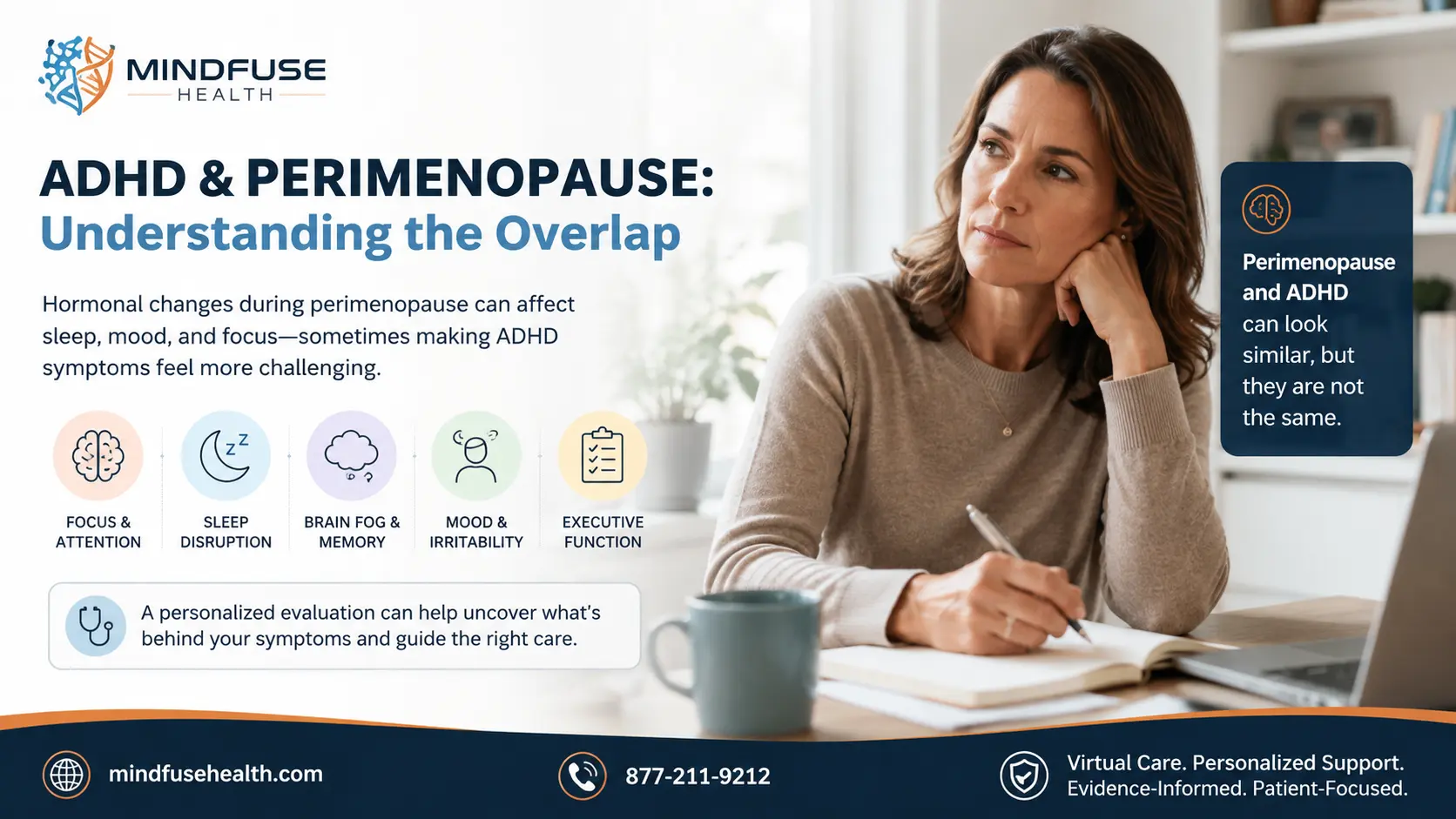
Perimenopause and ADHD are different clinical issues, but some of their effects can overlap.
Problems such as brain fog, forgetfulness, poor sleep, difficulty concentrating, irritability, and feeling less able to manage routines do not point to a single diagnosis on their own.
The more useful questions are:
- Were attention or organizational difficulties present earlier in life?
- Have symptoms recently changed or become harder to manage?
- Has sleep deteriorated?
- Are hot flashes, night sweats, mood changes, or menstrual changes occurring?
- Are anxiety, depression, medications, or medical conditions contributing?
- Is more than one factor present at the same time?
A thoughtful evaluation looks at the complete pattern rather than assuming that every midlife cognitive complaint is caused by either ADHD or hormones.
What happens during perimenopause?
Perimenopause is the transition leading up to menopause.
During this time, ovarian hormone levels fluctuate and menstrual cycles often begin to change. The experience varies considerably between individuals.
Symptoms may include:
- Changes in menstrual cycles
- Hot flashes
- Night sweats
- Sleep disruption
- Vaginal or urinary symptoms
- Mood or emotional changes
- Changes in well-being that may affect daily functioning
For some women, sleep disruption becomes particularly important.
Repeated nighttime awakenings, night sweats, or insomnia can contribute to daytime fatigue and may make concentration, memory, decision-making, and emotional regulation more difficult.
What can ADHD look like in adult women?
ADHD is a neurodevelopmental condition involving persistent patterns of inattention and/or hyperactivity-impulsivity that interfere with functioning.
In adults, ADHD may involve:
- Difficulty organizing tasks or responsibilities
- Procrastination
- Trouble estimating or managing time
- Forgetfulness
- Losing track of appointments or tasks
- Difficulty completing projects
- Becoming easily distracted
- Internal restlessness
- Impulsive decisions
- Difficulty managing multiple responsibilities
- Inconsistent follow-through despite knowing what needs to be done
ADHD symptoms can affect work, relationships, household responsibilities, finances, health routines, and other areas of daily life.
Learn more about Adult ADHD symptoms and evaluation.
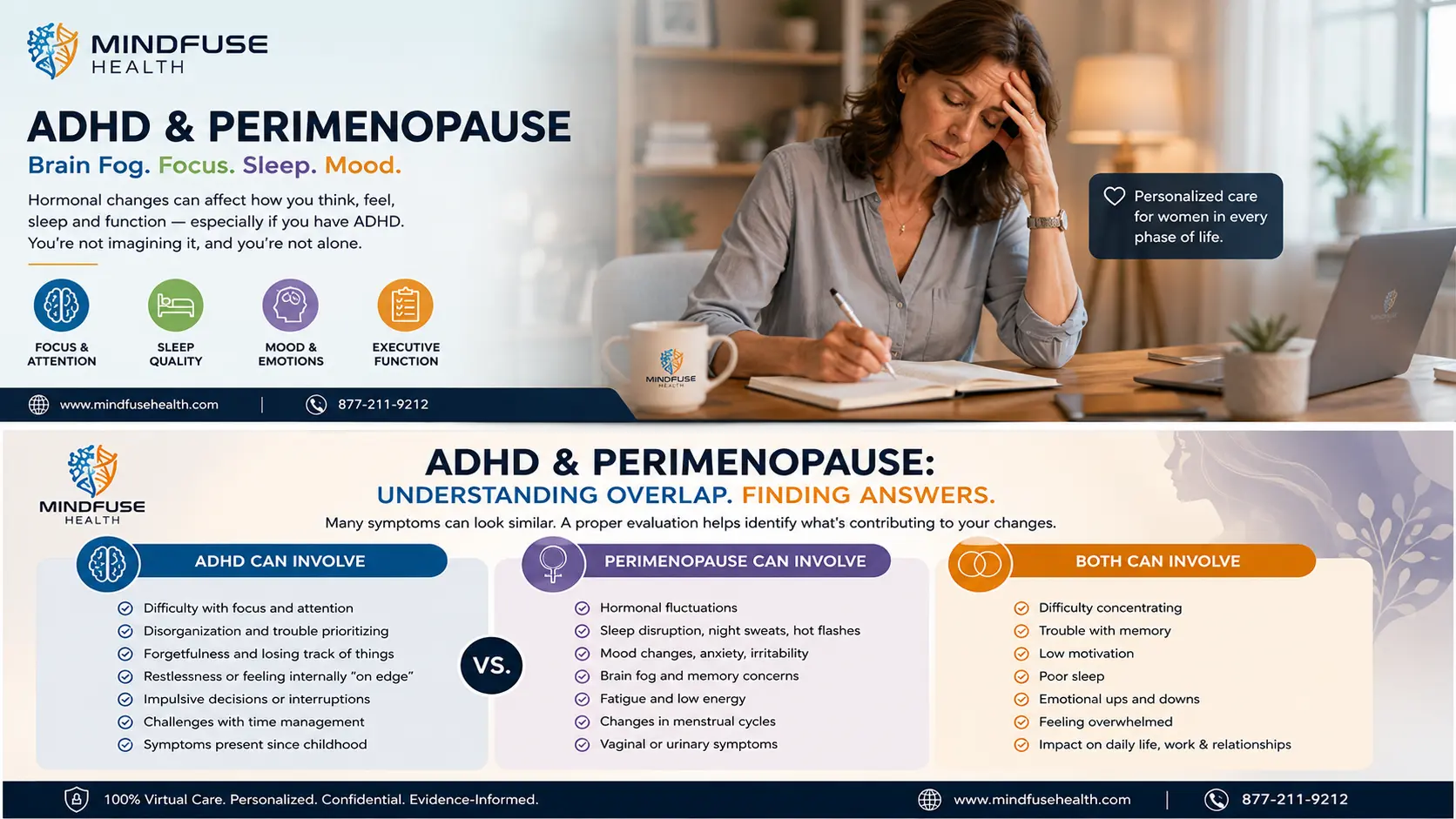
ADHD should reflect a pattern that began earlier in life
A major distinction between ADHD and newly developing concentration problems during perimenopause is the patient’s history.
ADHD does not typically begin for the first time during the 40s or 50s.
For an adult ADHD diagnosis, clinicians look for evidence that relevant symptoms were present earlier in development, including before age 12, even if ADHD was not formally recognized or diagnosed at that time.
Some women may not have received a childhood diagnosis because symptoms were less disruptive, more inattentive than hyperactive, or compensated for through structure, academic ability, family support, or other coping strategies.
As responsibilities increase—or sleep, mood, health, or hormonal circumstances change—longstanding executive-function difficulties may become harder to compensate for.
This means a woman may receive her first ADHD diagnosis in adulthood, even though the underlying symptom pattern began much earlier.
Can perimenopause make ADHD symptoms feel worse?
Some women report that attention, organization, emotional regulation, or executive-function difficulties become more noticeable during hormonal transitions.
Research into ADHD and female sex hormones is growing, but the evidence remains limited.
A 2025 systematic review identified suggestive evidence of relationships between hormonal changes and ADHD symptoms, particularly during puberty and across the menstrual cycle. However, the available studies were few, often small, and varied considerably in their methods and populations.
Importantly, the review found that research specifically examining ADHD during menopause was still lacking.
For that reason, it would be too strong to say that perimenopause has been proven to worsen ADHD in every woman.
A more accurate interpretation is that hormonal changes, sleep disruption, mood symptoms, life demands, and other health factors may interact with longstanding ADHD symptoms in ways that deserve individualized assessment.
ADHD or perimenopause? Symptoms that can overlap
Several complaints may occur in either context.
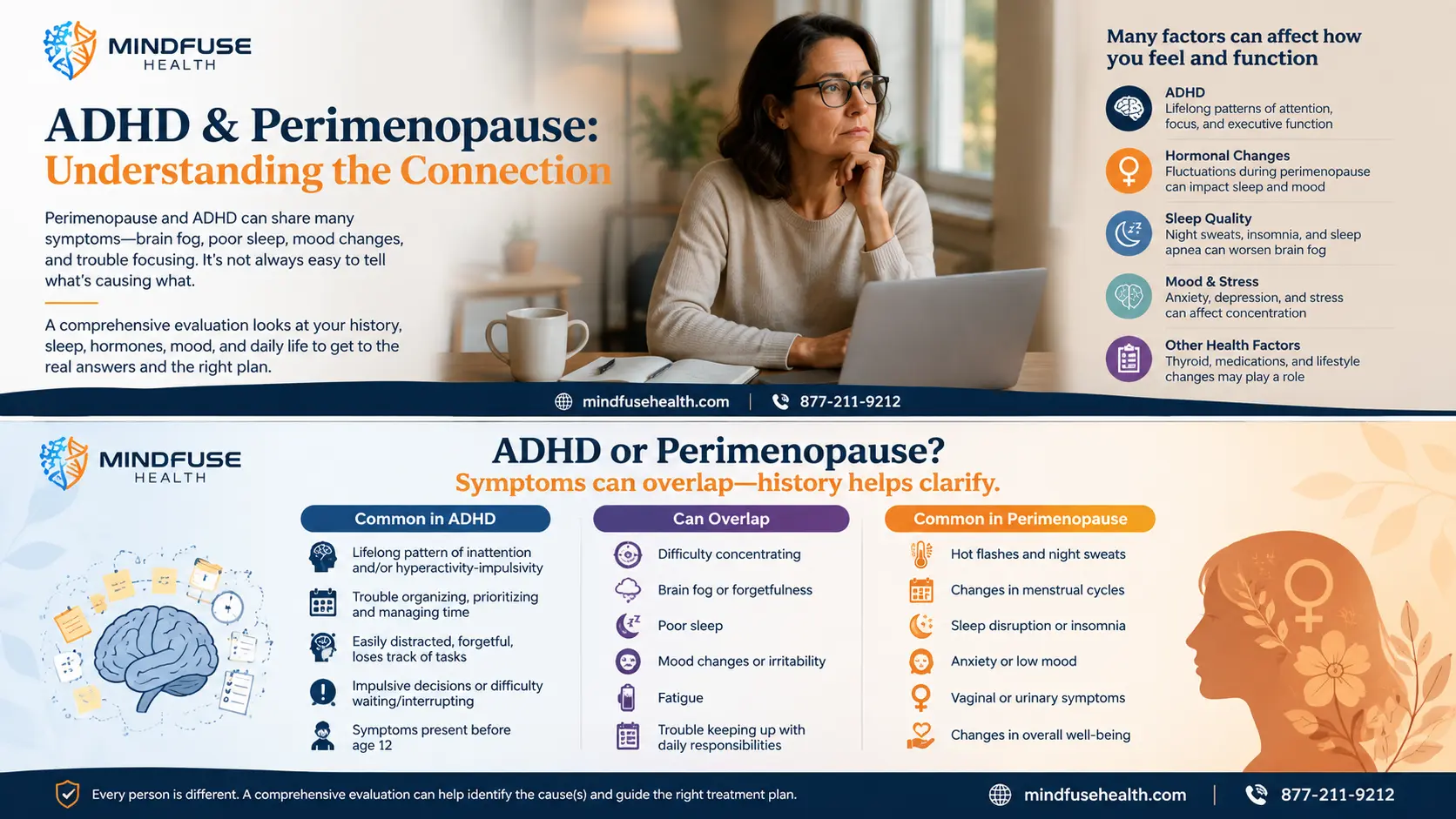
| Symptom or concern | May occur with ADHD | May occur during perimenopause |
|---|---|---|
| Difficulty concentrating | Yes | Yes |
| Forgetfulness | Yes | Yes |
| Brain fog | Can be reported | Can be reported |
| Poor sleep | Can coexist with ADHD | Common during the menopausal transition |
| Difficulty organizing | Common ADHD feature | May become harder when sleep or cognitive symptoms worsen |
| Mood changes | Can coexist with ADHD | May occur during perimenopause |
| Restlessness | May occur with ADHD | Can have several causes |
| Fatigue | Not specific to ADHD | May accompany poor sleep or other health factors |
| Executive-function difficulty | Common in ADHD | May feel worse when sleep, mood, or health changes interfere with functioning |
This overlap is why symptoms alone cannot reliably determine the cause.
Clinicians also consider when symptoms began, how persistent they are, how they changed over time, and what other medical or mental-health factors are present.
What does “brain fog” mean?
“Brain fog” is a common nonmedical description rather than a specific diagnosis.
People may use the term to describe:
- Forgetfulness
- Slowed thinking
- Difficulty finding words
- Trouble concentrating
- Mental fatigue
- Difficulty switching between tasks
- Feeling less mentally sharp than usual
Brain fog can have many possible contributors, including poor sleep, mood disorders, medications, medical conditions, hormonal changes, and other factors.
It should not automatically be considered ADHD.
Similarly, someone with established ADHD may experience brain fog for reasons unrelated to ADHD itself.
Learn more about brain fog and cognitive concerns.
Sleep may be an important bridge between perimenopause and attention problems
Sleep deserves particular attention because it can affect many of the same cognitive functions that patients associate with ADHD.
Perimenopause may be accompanied by:
- Insomnia
- Nighttime awakenings
- Hot flashes
- Night sweats
- Changes in sleep quality
Poor or fragmented sleep may affect:
- Attention
- Working memory
- Reaction time
- Emotional regulation
- Decision-making
- Energy
- Motivation
- Executive function
A woman with longstanding ADHD may therefore feel less able to compensate for existing attention or organization difficulties when sleep deteriorates.
Sleep apnea should also be considered when symptoms include snoring, witnessed breathing pauses, morning headaches, unrefreshing sleep, or excessive daytime sleepiness.
Patients with persistent sleep concerns can learn more about sleep evaluation at Mindfuse Health.
Mood and anxiety can also affect concentration
Anxiety and depression can both interfere with concentration, memory, motivation, sleep, and day-to-day functioning.
They can also coexist with ADHD and may occur during the perimenopausal years.
For example:
Anxiety may make concentration difficult because attention is repeatedly pulled toward worry, uncertainty, physical tension, or intrusive thoughts.
Depression may affect concentration through low mood, reduced motivation, low energy, slowed thinking, or loss of interest.
A clinical assessment therefore considers whether attention difficulties occur independently, alongside mood symptoms, or primarily during periods of poor sleep, anxiety, or depression.
Learn more about anxiety and depression.
How clinicians may evaluate ADHD symptoms during perimenopause
A comprehensive evaluation may explore several areas rather than focusing only on an ADHD symptom checklist.
These may include:
- Current attention and executive-function symptoms
- Childhood and earlier-life patterns
- Work, home, and relationship functioning
- When symptoms became more noticeable
- Menstrual and menopausal history
- Hot flashes or night sweats
- Sleep quality
- Snoring or daytime sleepiness
- Anxiety or depression
- Irritability or emotional changes
- Current ADHD medication response
- Other medications and supplements
- Substance use when clinically relevant
- Thyroid or other medical concerns when appropriate
- Previous ADHD or mental-health evaluations
- Changes in daily responsibilities or stress
The goal is to understand whether symptoms are best explained by ADHD, perimenopause-related changes, another condition, or several overlapping factors.
Can you develop ADHD during perimenopause?
Perimenopause does not establish a new diagnosis of ADHD by itself.
Someone may first recognize or be diagnosed with ADHD during perimenopause, but an adult ADHD diagnosis requires evidence of a developmental pattern rather than symptoms that began only during midlife.
If concentration and executive-function problems are genuinely new, clinicians should consider other possible causes rather than automatically labeling them ADHD.
Potential contributors may include:
- Poor sleep
- Anxiety
- Depression
- Medication effects
- Menopause-related symptoms
- Thyroid disorders
- Anemia or other medical conditions
- Substance use
- Major changes in stress or responsibilities
Sometimes more than one contributor is present.
Does hormone therapy treat ADHD?
Menopausal hormone therapy may be appropriate for certain menopausal symptoms after an individualized clinical discussion of potential benefits, risks, medical history, and treatment goals.
Hormone therapy should not currently be presented as an established treatment for ADHD itself.
Available research has not established menopausal hormone therapy as a replacement for standard ADHD evaluation or treatment.
A patient may appropriately receive care for both ADHD and menopausal symptoms, but each treatment should have its own clinical indication.
Patients interested in menopausal symptom evaluation can learn more about Women’s Hormone Therapy at Mindfuse Health.
What if ADHD medication seems less effective during perimenopause?
A perceived change in ADHD medication effectiveness deserves reassessment rather than an automatic medication increase.
Several factors may affect how well someone feels they are functioning, including:
- Worsening sleep
- Night sweats or hot flashes
- Inconsistent medication use
- New medications or supplements
- Anxiety or depression
- Changes in daily demands
- Increased stress
- Substance use
- Cardiovascular or other medical changes
- Menopausal symptoms
- Changes in the underlying treatment needs
Medication changes should be individualized and supervised by the treating clinician.
Medication is never guaranteed and should be prescribed only when the treating clinician determines that it is clinically appropriate and legally permitted.
Can ADHD and perimenopause be treated at the same time?
Potentially, yes.
ADHD and menopausal symptoms are separate clinical issues, and a patient may require evaluation or treatment for both.
The care plan depends on the individual’s:
- Symptoms
- Medical history
- Current medications
- Cardiovascular and other risk factors
- Sleep
- Mood
- Menopausal symptoms
- ADHD history
- Treatment goals
Treating one issue should not automatically be assumed to resolve the other.
For Adult ADHD evaluation and ongoing care, see Adult ADHD Care.
For menopausal symptom evaluation, see Women’s Hormone Therapy.
When to seek evaluation
Consider discussing symptoms with a clinician when:
- Attention or executive-function difficulties interfere with work or home life
- Longstanding ADHD symptoms have become harder to manage
- Concentration problems appeared or changed substantially during midlife
- Sleep has become persistently poor
- Hot flashes or night sweats interfere with daily functioning
- Mood or anxiety symptoms are increasing
- ADHD medication seems to be working differently
- Brain fog is persistent or worsening
- You are unsure whether symptoms reflect ADHD, perimenopause, another medical condition, or several factors together
A structured assessment can help separate overlapping symptoms and determine which concerns may need further evaluation or treatment.
ADHD and perimenopause FAQs
Does perimenopause make ADHD worse?
Some women report more noticeable attention or executive-function difficulties during hormonal transitions, but research specifically examining ADHD during menopause remains limited.
Sleep disruption, mood symptoms, changing life demands, and other medical factors may also make longstanding ADHD symptoms harder to manage.
Can perimenopause cause ADHD-like symptoms?
Perimenopause may be associated with sleep, mood, memory, concentration, and well-being changes that can resemble some complaints reported by adults with ADHD.
That does not mean the person has developed ADHD.
ADHD requires a developmental history of symptoms beginning earlier in life.
Can you suddenly develop ADHD in your 40s or 50s?
ADHD is a neurodevelopmental disorder and does not generally begin for the first time in midlife.
Someone can receive their first diagnosis in their 40s or 50s if evidence suggests that relevant symptoms were present earlier in development.
New-onset concentration problems should also prompt consideration of sleep, mood, medications, hormonal changes, medical conditions, and other possible causes.
Is brain fog the same as ADHD?
No.
Brain fog is a nonspecific description that may include forgetfulness, mental fatigue, slowed thinking, or trouble concentrating.
ADHD is a defined neurodevelopmental condition with a persistent developmental pattern of symptoms.
A person can experience both, but the terms are not interchangeable.
Can poor sleep make ADHD symptoms feel worse?
Poor sleep can impair attention, memory, emotional regulation, reaction time, and executive function.
For someone who already has ADHD, deteriorating sleep may make existing difficulties feel harder to manage.
Persistent snoring, daytime sleepiness, frequent awakenings, or unrefreshing sleep may warrant separate sleep evaluation.
Does estrogen affect ADHD symptoms?
Research suggests that sex hormones may be associated with ADHD symptom variation in females, but current evidence remains limited.
A 2025 systematic review found suggestive relationships across some hormonal stages, particularly puberty and the menstrual cycle, while emphasizing the need for more research, including research specifically involving menopause.
Does hormone therapy improve ADHD?
Menopausal hormone therapy has not been established as a treatment for ADHD itself.
It may be considered for appropriate menopausal symptoms in selected patients, while ADHD should be evaluated and treated according to its own clinical indications.
Should ADHD medication automatically be increased during perimenopause?
No.
If medication seems less effective, clinicians may first reassess sleep, mood, medication adherence, new medications, menopausal symptoms, stress, medical changes, and whether the existing ADHD treatment plan remains appropriate.
Any medication adjustment should be individualized and clinician supervised.
Getting the right evaluation matters
ADHD and perimenopause can intersect in complicated ways.
Perimenopause may affect sleep, mood, cognition, and day-to-day well-being. ADHD can independently affect attention, organization, impulsivity, time management, and executive function.
For some women, these issues may occur together.
Good care avoids assuming that every midlife cognitive symptom is hormonal—or that every problem with concentration represents ADHD.
The goal is to understand:
- What has been present throughout life
- What changed recently
- What is affecting sleep or mood
- Which medical factors may be contributing
- Which symptoms are interfering most with daily life
That information can help guide a more individualized evaluation and care plan.
If you are experiencing persistent attention or executive-function concerns, learn more about Adult ADHD evaluation and Adult ADHD Care.
If menopausal symptoms are also affecting your quality of life, explore Women’s Hormone Therapy.
Sources
- American College of Obstetricians and Gynecologists. The Menopause Years.
- American College of Obstetricians and Gynecologists. Hormone Therapy for Menopause.
- National Institute of Mental Health. ADHD in Adults: 4 Things to Know.
- Osianlis E, Thomas EHX, Jenkins LM, Gurvich C. ADHD and Sex Hormones in Females: A Systematic Review. Journal of Attention Disorders. 2025.
Sources & clinical references
- The Menopause Years American College of Obstetricians and Gynecologists
- Hormone Therapy for Menopause American College of Obstetricians and Gynecologists
- ADHD in Adults: 4 Things to Know National Institute of Mental Health
- ADHD and Sex Hormones in Females: A Systematic Review Journal of Attention Disorders / PubMed